My first job out of college was covering town hall meetings.
Borough councils, commissioner’s meetings, small events in township halls all over Delaware County, Pennsylvania. It’s a grind — I did it for about four years, and I kept doing it part-time even after I’d landed a full-time job as a radio producer. I’m glad I did, because it taught me something a dataset can’t.
Let me tell you about a story I covered in the mid-1990s.
There was a restaurant in town — a popular one. The owner had spent real effort building relationships with local political leaders, and had a fair amount of sway with the press, partly because they advertised heavily in the newspaper and on local TV, and partly because it was simply the place to be seen. If you only read the paper or watched the local news, that restaurant looked like a pillar of the community.
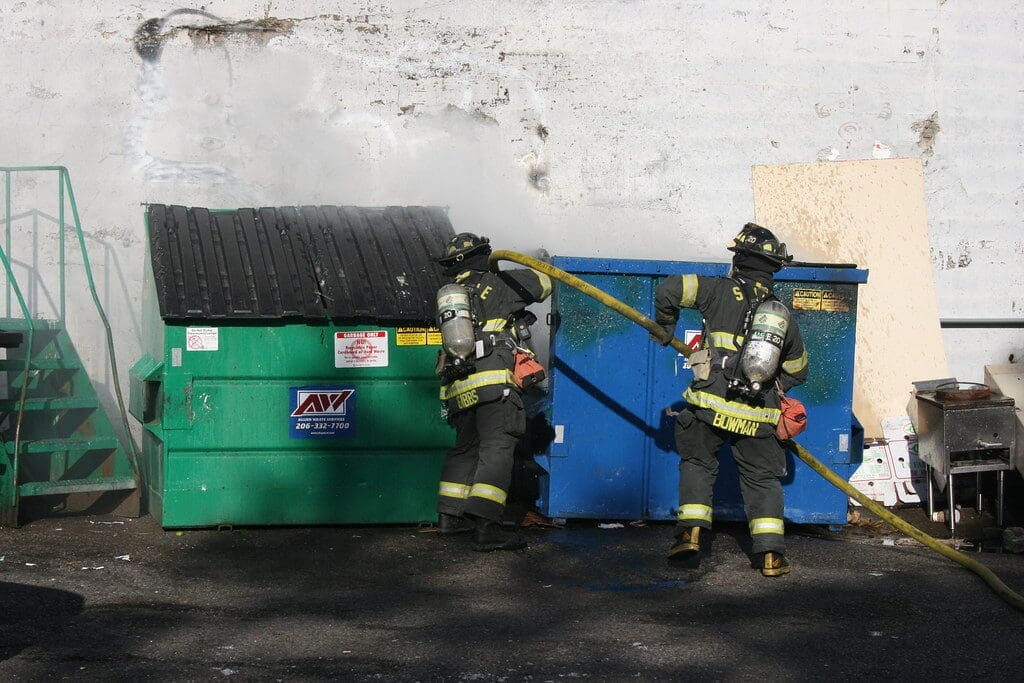
But something started surfacing in the council meetings. There were problems in the back of house. The restaurant was generating far more waste than its permits allowed, with no real plan for dealing with it. And it backed right up against a residential neighborhood — no proper buffer between the dumpsters and the houses behind them. For the neighbors, it had become a genuine misery. Their food waste dumpster even caught fire one night when some of the kitchen guys disposed of cooking grease improperly.
If you just drove by the restaurant or read its reviews in the paper, you’d have had no idea any of this was happening. This was in the early days of the internet, and long before folks could swarm a restaurant with one-star reviews.
This story lived in the council chambers — in the slow groundswell of residents who had to organize themselves, show up, and bring their complaint to the commissioners in person. I don’t think anyone really believed them until they hit critical mass. Once there were enough faces in enough chairs, the township couldn’t wave the problem away anymore.
That was thirty years ago. There are stories exactly like it unfolding all over the country right now — probably in my own town in New Jersey, probably in yours, ones we don’t even know about yet.
And here’s why I’m telling you a thirty-year-old restaurant story at a time when I’m spending a lot of time thinking about what AI’s doing to writers and business owners.
The one thing AI genuinely cannot do is *report*. It can’t extract information that doesn’t already exist somewhere in a form it can reach. It can’t sit in the council meeting. It can’t read the room when the residents finally hit their limit. It can’t write a post in the neighborhood Facebook group about a weird smell. It can only work with what’s already been written down and indexed — and it’s trained on data that isn’t nearly as nimble as a live search of the open web.
That’s exactly why the publishers holding their ground right now tend to be local — even hyper-local. The big national and global topics, the things trending everywhere at once, are precisely where AI is strongest, because that ground is already so heavily covered. But the city council meeting? The mill that just closed and the person who lost their job when it did? Nobody else is reporting that. The machine has nothing to summarize until a human goes and witnesses it first.
When AI does more of our question-answering for us, we lose the serendipity — the stumbling onto something we didn’t know to look for. As humans, we’re already terrible at keeping track of what’s happening in our own backyard. Hand more of that gatekeeping to a machine, and it gets easier for a piece of information to simply never surface. Easier, even, for someone to *keep* it from surfacing.
The old “what time does the Super Bowl start” traffic is what used to pay for the hard reporting. (Which, in turn, is what replaced the marginally questionable classified ads in the back of every alt-weekly.) The ad revenue from the easy stuff used to quietly subsidized the investigation into the restaurant’s back of house. Pull out the easy stuff, and you put the mission itself at risk.
So if you’re wondering what earns trust in this new landscape, start here: be the source that’s actually *there.* Report your own corner of the world honestly — your work, your impact, the questions your community is really asking. The truth has always found its way out of the back of house eventually. AI just changes how fast it gets there, and who’s standing in the room when it does.